The Modular Concrete Construction Technique (MCCT), known across the developing world as monolithic construction, casts walls, slabs and openings together as a single, continuous concrete structure. It is faster, stronger and more cost-effective than brick and frame construction, and it is formwork that makes it possible. Pre-Form Global supplies the systems and the engineering.
Conventional construction builds in stages: columns and shear walls first, then beams and slabs, then brick or block infill, then plaster. With MCCT, all walls, floors, slabs, columns and beams, complete with door and window openings, are cast in place in one operation on site.
On housing projects with large-scale repetition, the effect is the transformation of the project into a production line: the same crew strikes, re-erects and casts the same cell, day after day. Build times drop by 30-50% against conventional methods, with unsurpassed structural accuracy and tolerances.
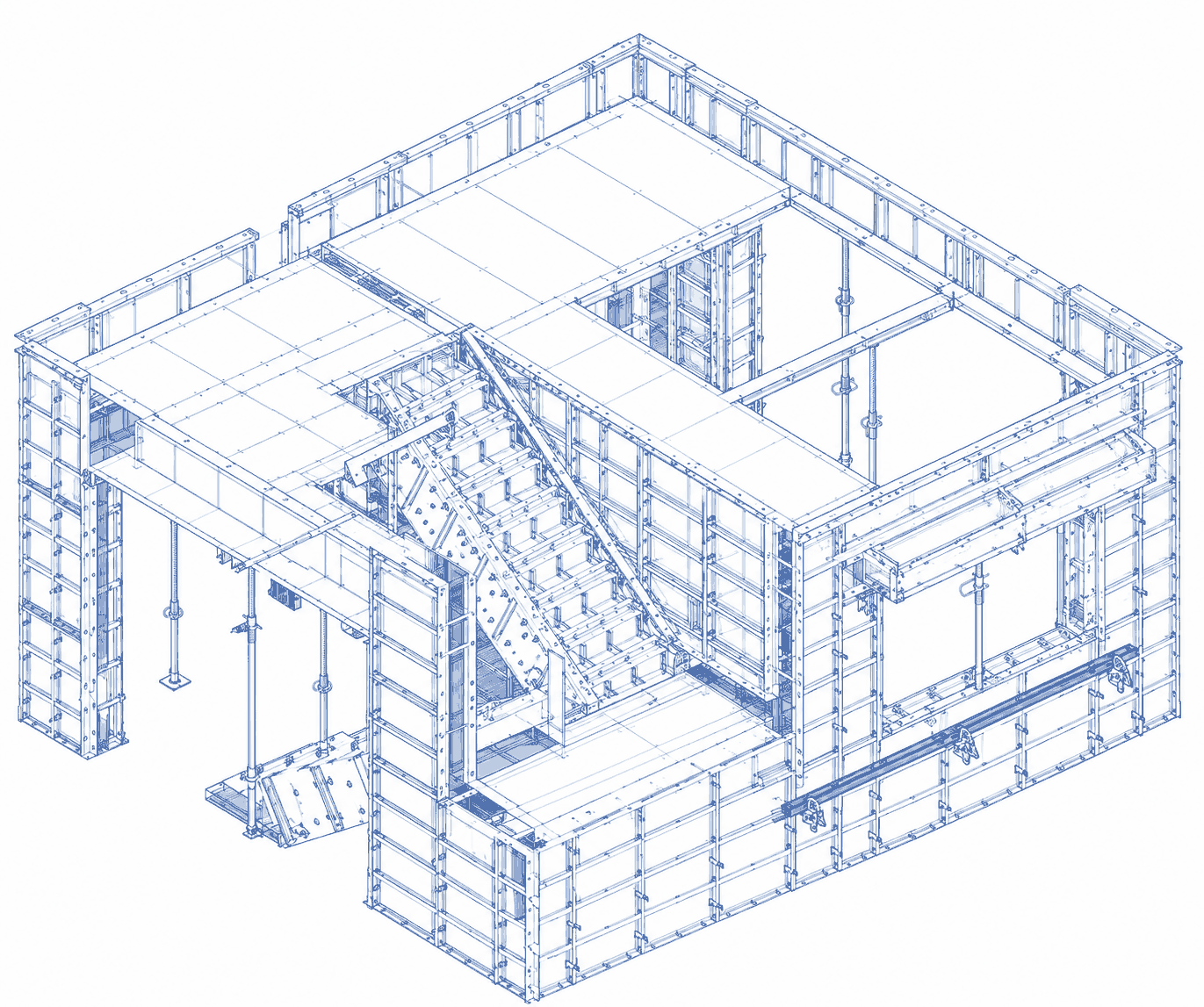
Compared to block or brick and RC frame construction, these are the value adds achieved with the Monolithic, or Modular Concrete, Construction Technique.
The process easily achieves one housing unit every 1-3 days per set of formwork, excluding finishes: the site becomes a production line rather than a sequence of trades.
A potential overall saving of up to 30% against block, brick and RC frame buildings, with labour-intensive installation that creates jobs for unskilled and semi-skilled workers after minimal training.
The whole structure is one material with one behaviour, preventing the problems of mixing a frame with infill panels. The result is a stronger, more resilient building.
Block configurations adapt to the site and to best-practice urban design, and ground floors can carry commercial space with residential units above for a genuine mixed-use environment.
Building towards net zero: low-carbon concrete, cement substitutes, the thermal mass of the envelope, natural carbonation, and an optimised whole-life carbon investment.
Maximises locally sourced materials and labour, delivers a robust product with nominal future maintenance, and scales and replicates easily to other sites anywhere in the country.
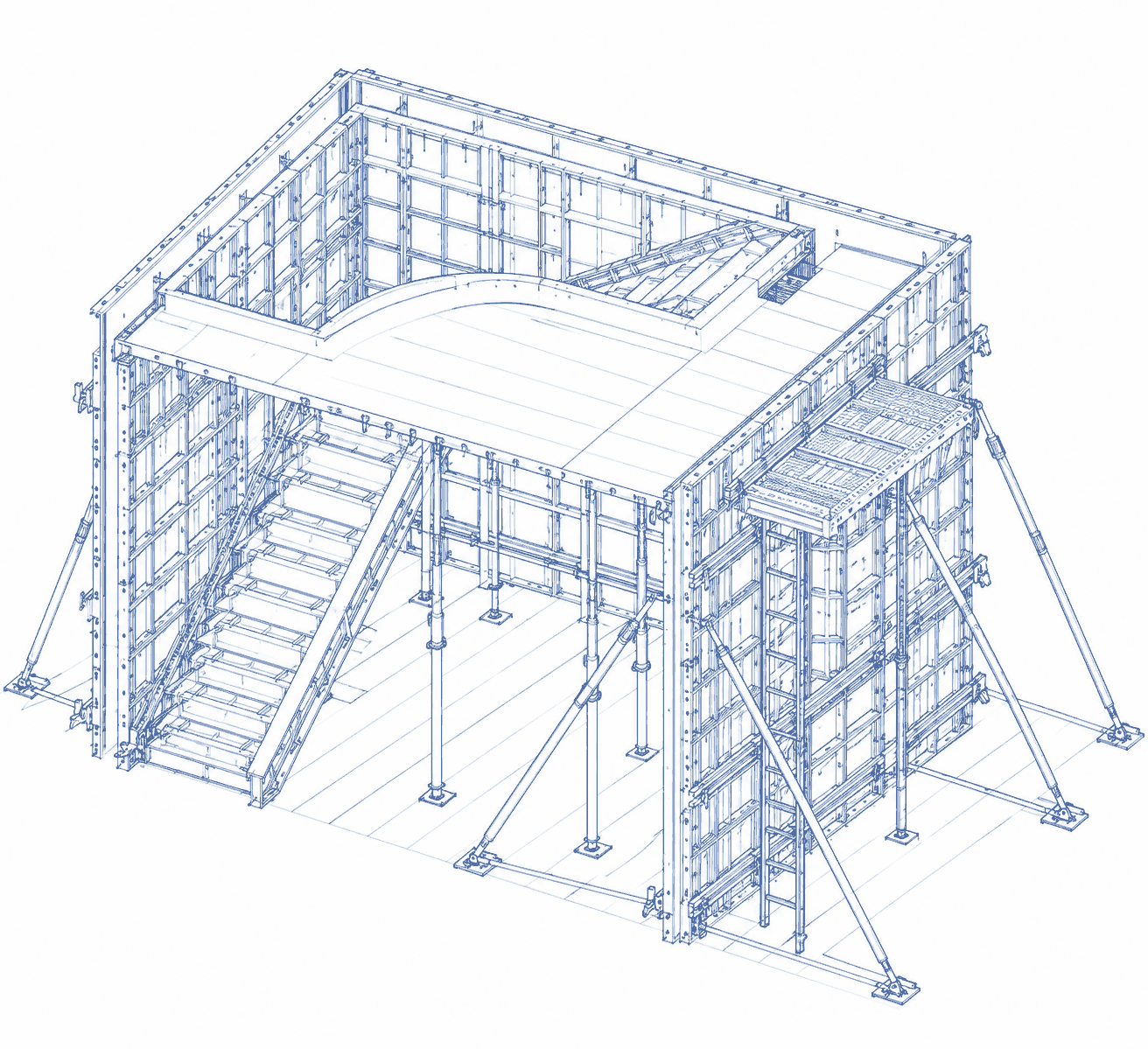
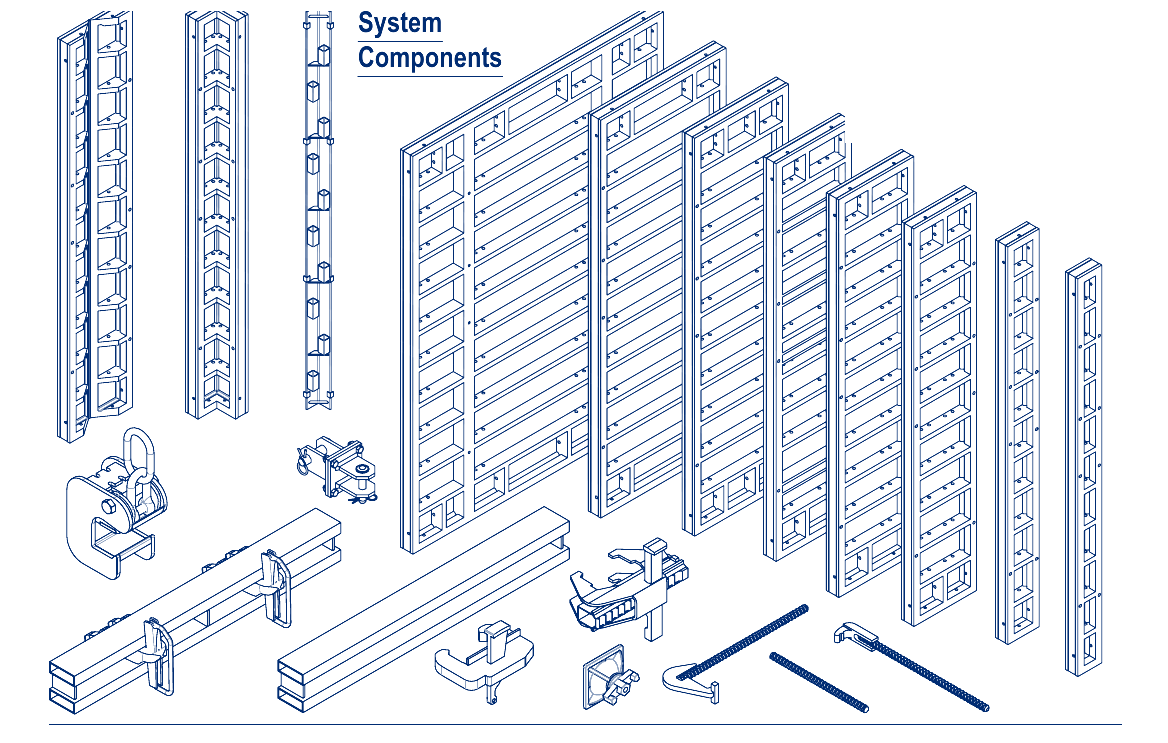
Modular handset aluminium formwork is the engine of modern monolithic construction. Walls, slabs, beams and stairs, together with window and door recesses, are formed in a single casting, and every panel is light enough to be handled without a crane.
Panels are prefabricated to the project's drawings and trial-assembled before delivery, so almost any building geometry is possible, from social housing to multi-level apartment blocks. A drophead prop system allows early striking of slab formwork, so a small number of components cycles fast with simplified logistics.
Compared to block, brick and RC frame buildings, the modular concrete structure yields a potential overall saving of up to 30%. The savings are structural, not cosmetic.
Aluminium formwork leaves a first-class concrete finish. A light skim and sand replaces the entire plastering trade, or the surface takes cladding directly.
All walls are load-bearing, so slabs span two ways over shorter spans. Thinner slabs mean a lower total dead load, less concrete and less rebar per unit.
Slabs come off the formwork ready for flooring, and services are routed within the shell, so there is no chasing for electrical and plumbing afterwards.
Labour-intensive installation with nominal machine requirements. Unskilled and semi-skilled workers do the work after minimal training, creating jobs in recipient communities.
The formwork is the investment. Structure and wet-works savings of 15-25% against conventional construction are typical, and grow with every reuse of the same set.
A seamless concrete envelope with minimal joints resists wear and moisture ingress, so the finished building needs nominal maintenance for its 70+ year service life.
Africa needs quality housing for all income groups, in the cities and metros, at a pace and price conventional methods struggle to match. MCCT is one of the few methods that genuinely accelerates delivery while improving the product: a robust, seamless concrete home with nominal future maintenance.
The method maximises locally sourced materials and local labour, scales and replicates easily from site to site, and its architectural flexibility supports real urban design: varied block configurations, mixed-use ground floors with residential units above, and safe, comfortable communities with a sense of place.
Monolithic concrete construction is standard practice across Latin America and Southeast Asia, and it is proving itself in Africa. These reference projects show what one set of formwork can do.
South Africa’s first MCCT project: 1,800 student accommodation units at Nelson Mandela University, built as 3-storey walk-ups over three phases. Over 15,000m³ of concrete cast with one 1,700m² set of aluminium formwork. No plastering, no screed, no chasing.
1,502 social housing apartments in 3-storey walk-ups, with 140,000m² of concrete formed on a 1,700m² aluminium formwork set. Faster delivery, better quality, and real community and local labour participation.
450 villas for the Comilog mining company: seven layout variations, one to six bedrooms, cast from just three formwork sets. 21,400m³ of concrete, with the structural accuracy lifting the quality of all the finishing trades behind it.
In the world’s most mature monolithic market, a typical 5-storey walk-up programme delivers 370 apartments with a single formwork set, striking, re-erecting and casting one apartment every day. Brazil’s largest homebuilders run entire pipelines on the method.
We would rather you saw the whole picture. Here is the monolithic method, strengths and weaknesses alike, against conventional frame-and-infill construction.
The weaknesses and threats are exactly why formwork supply and engineering belong with one accountable partner. Pre-Form Global designs the formwork to the architecture, plans the casting sequence and lead times, and supports your design team, so the production line starts on time and keeps its rhythm.
The Modular Concrete Construction Technique, known internationally as monolithic construction: all walls, slabs, columns and beams, with door and window openings, cast in place in one operation instead of staged frame-and-infill construction.
One housing unit every 1-3 days per set of formwork, excluding finishes. Build times run 30-50% faster than conventional methods, because the site works like a production line.
Up to 30% overall against brick and RC frame construction. No plastering, no screed, no chasing for services, thinner slabs, and structure and wet-works savings that grow with every formwork reuse.
No. Minimal machine requirements and simple, repetitive operations mean unskilled and semi-skilled workers with basic training do most of the work: ideal for community participation and job creation.
Anything with repetition: stand-alone houses, town houses, walk-ups to four storeys, multi-storey and high-rise apartment blocks, student accommodation and social housing programmes.
Yes. We ship formwork across Africa and beyond, with export logistics, assembly documentation and engineering support included. Your crews erect; we make sure they can.